Youth Exchange “CommUNITY Diplomats”
22 – 31 March 2026 · Thessaloniki, Greece
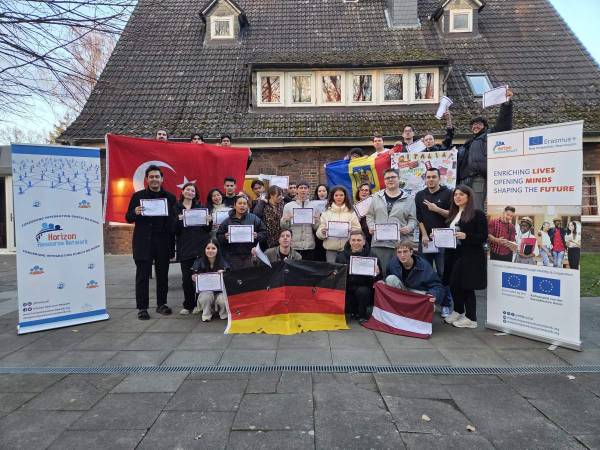
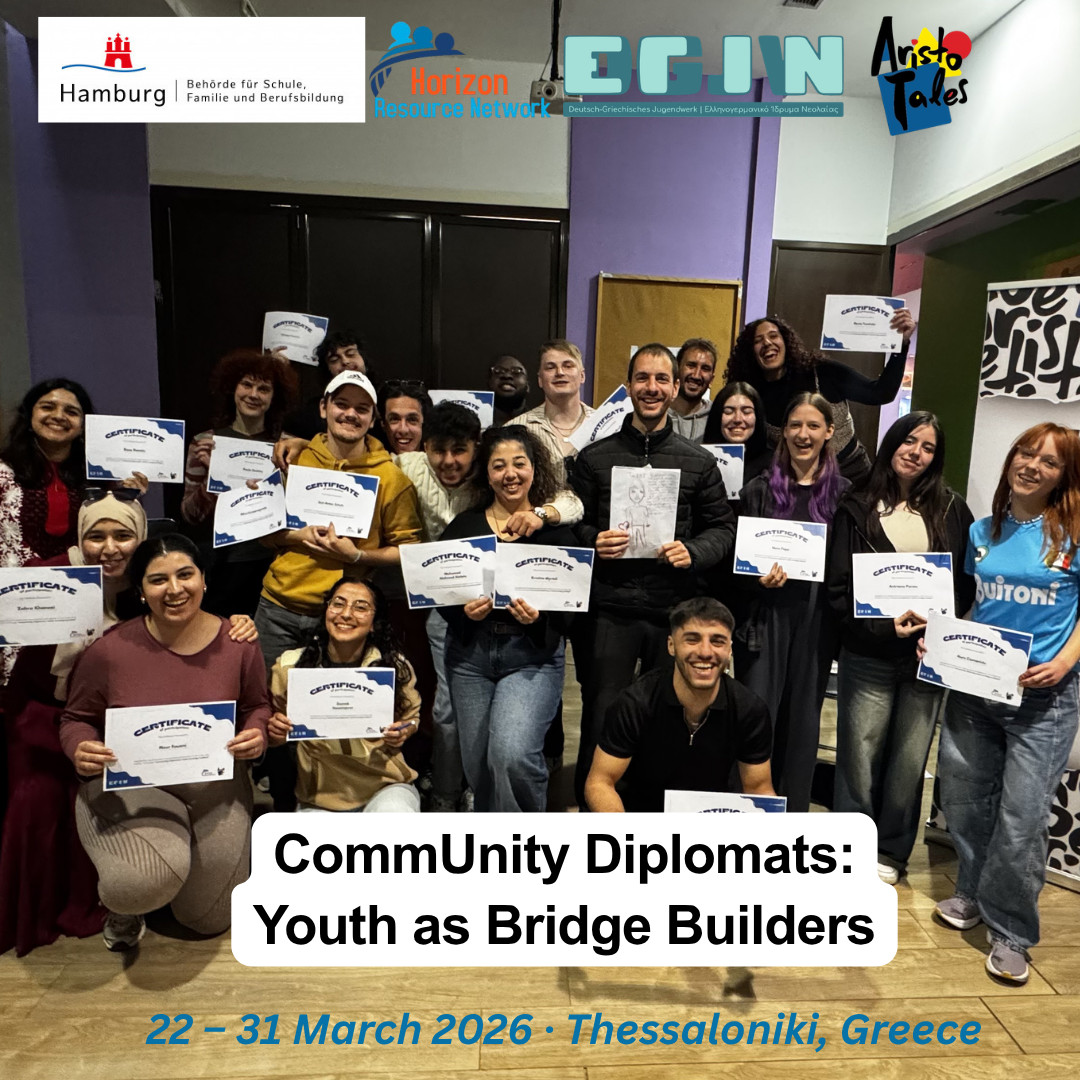
What does diplomacy look like when it happens not in a conference hall but in a school corridor, on a city bus, or in a community centre in Hamburg? That was the question at the heart of CommUnity Diplomats: Youth as Bridge Builders — a ten-day youth exchange that brought 12 young people from Germany together with their Greek peers in Thessaloniki this March.
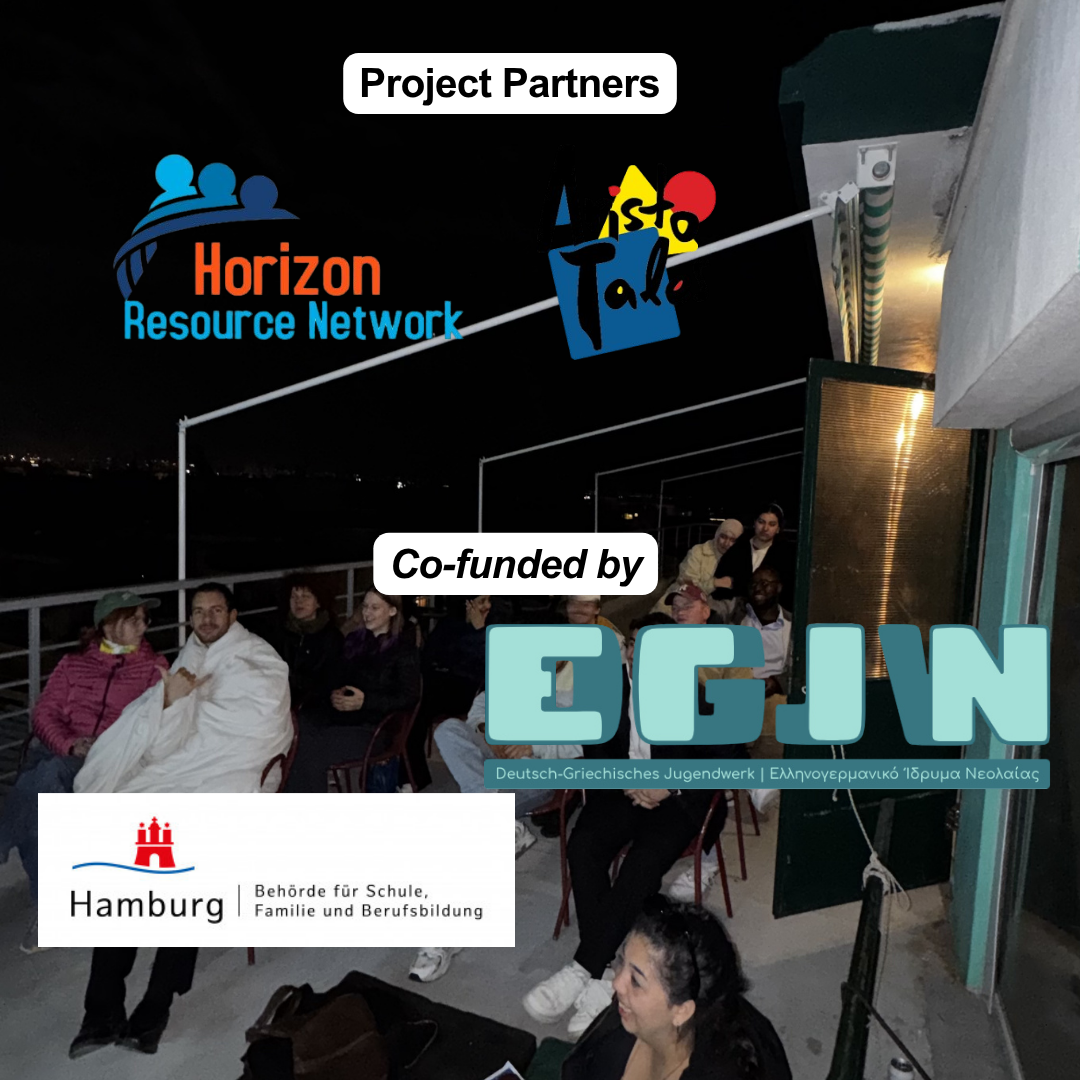
Co-organised by Horizon Resource Network e.V. and our Greek partners Aristo Tales, and co-financed by the Deutsch-Griechisches Jugendwerk (DGJW) and the Hamburg Behörde für Schule, Familie und Berufsbildung, the exchange invited participants to reimagine diplomacy — not as something done by governments, but as a daily practice of empathy, courage, and connection.
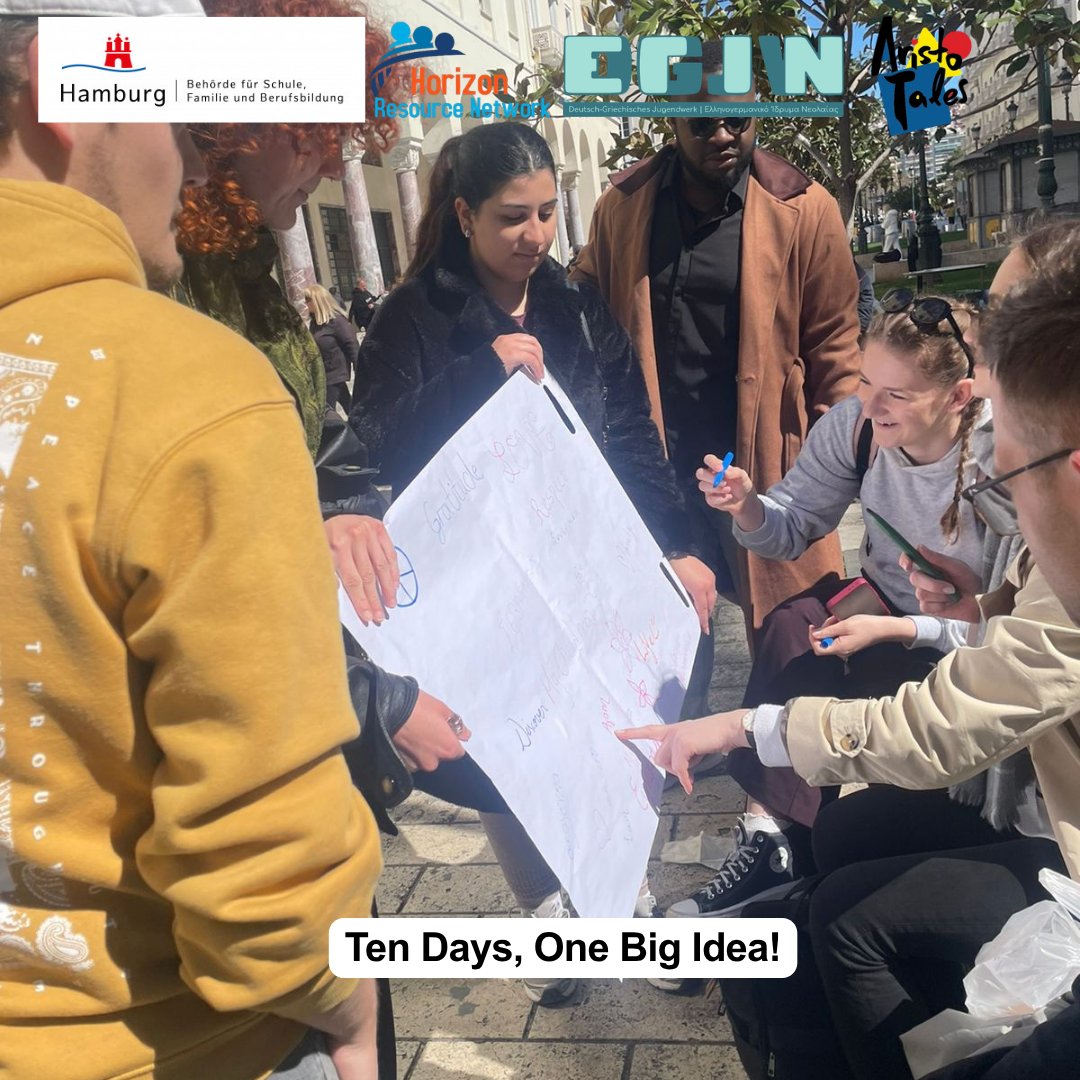
Ten Days, One Big Idea
The premise was simple but powerful: every young person can be a diplomat in their own community. Not by speaking on behalf of nations, but by representing values — inclusion, understanding, solidarity — in the spaces they already inhabit.
Over ten days, our 12 participants (aged 18–29, from Hamburg and beyond) worked alongside Greek youth through a rich mix of non-formal learning activities. The programme was carefully designed to move from personal reflection to collective action, building in depth and energy as the days progressed.
Highlights from the Programme
Getting to Know Each Other — and Ourselves
The opening days were about building trust. Through ice-breakers, team-building exercises, and community discussions, the group quickly moved beyond surface-level introductions. An early standout was “A Mosque in Sleepyville” — a role-play simulation that placed participants in a community divided over a controversial planning decision. It was a vivid, sometimes uncomfortable, and ultimately illuminating way to explore how prejudice and fear shape civic life — and how young people can help shift the narrative.
Going Beneath the Surface
Mid-week, the programme turned inward. The Cultural Iceberg activity explored how much of who we are is invisible to others — and how easily cultural misunderstandings arise when we only see the surface. “Sofia — Change Your Glasses” told the story of a young immigrant woman navigating unfamiliar systems, asking participants to literally step into her perspective.
One of the most moving sessions was Take a Step Forward — a classic equality exercise that made privilege and disadvantage visible in a way that no lecture ever could. Participants stood side by side, then stepped forward or back in response to prompts about their backgrounds, opportunities, and experiences. The room fell quiet. It always does.
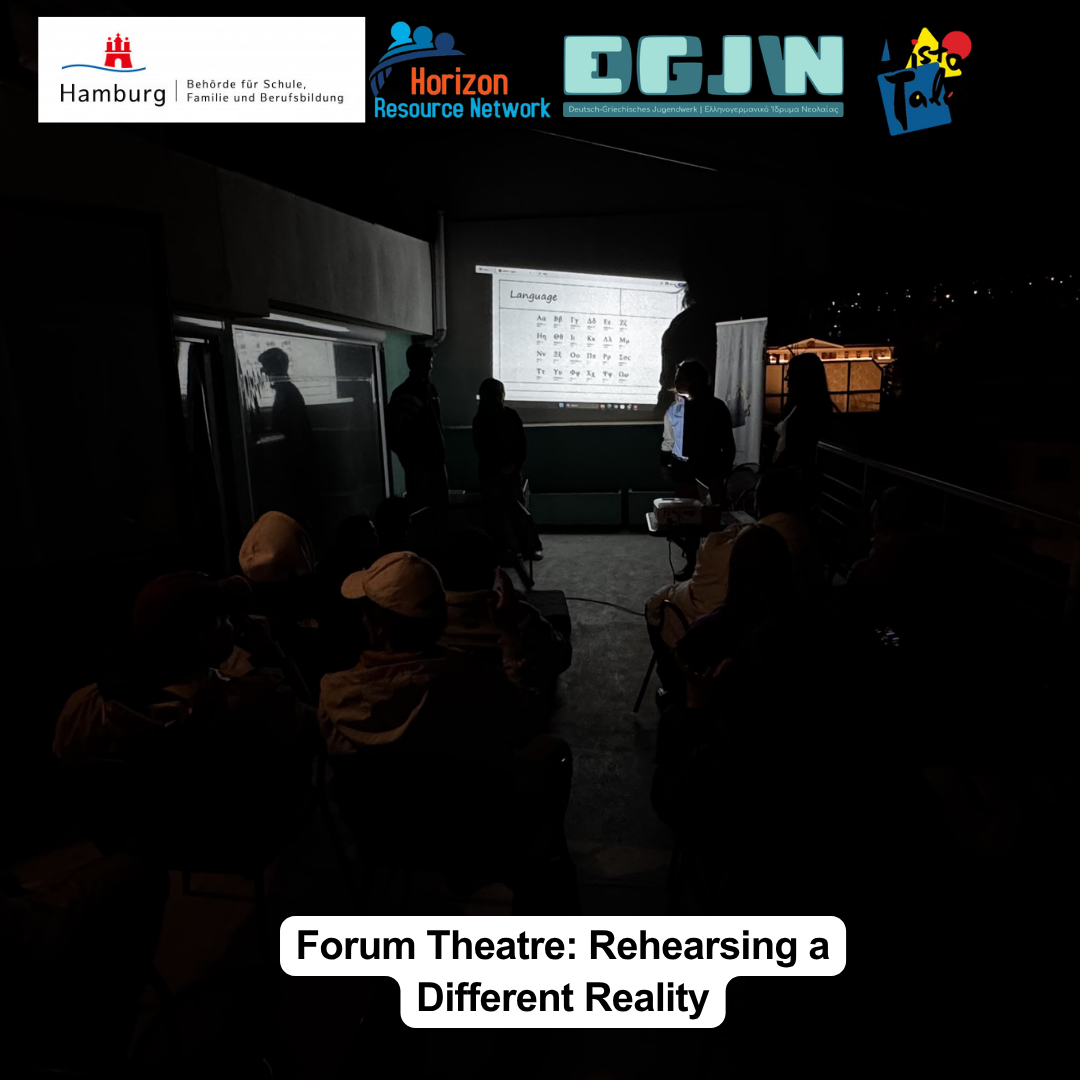
Forum Theatre: Rehearsing a Different Reality
If there was one activity that captured the spirit of the whole exchange, it was Forum Theatre — a participatory drama methodology developed by Augusto Boal. Participants acted out scenes of everyday discrimination, exclusion, and conflict, then the audience was invited to intervene: to stop the scene, take a character’s place, and try a different response.
For many of our participants — especially those with lived experience of migration and racism — this was more than a game. It was a chance to see their own stories on stage and to rehearse, together, the world they want to live in.
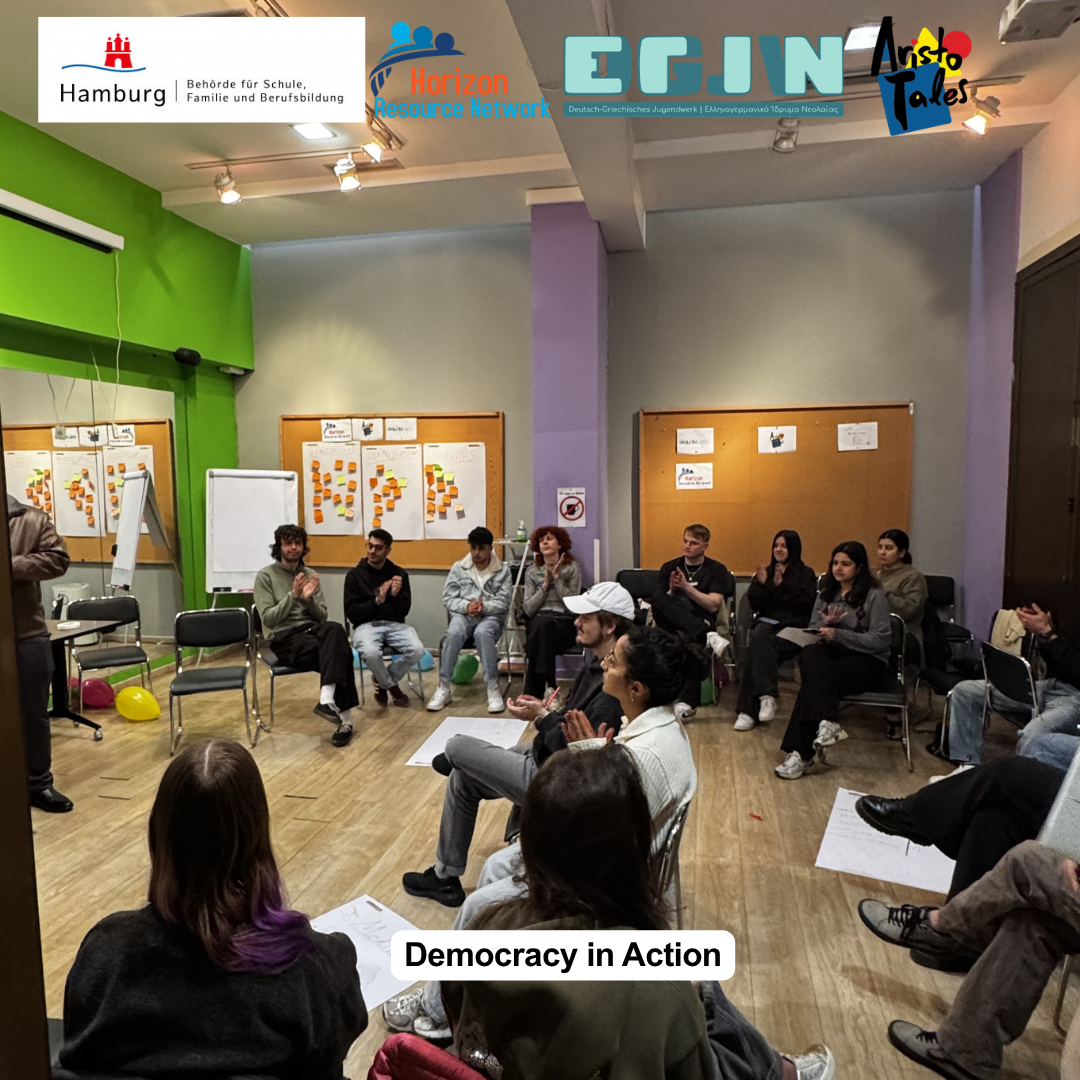
Democracy in Action
Day five was dedicated to civic participation. The Electioneering Activity challenged groups to build mock campaigns, test their messages, and persuade their peers. The Debate Tournament that followed was lively, rigorous, and occasionally heated — exactly as democratic debate should be.
Mapping the Community, Building the Campaign
The final phase of the exchange was about action. In Community Mapping sessions, participants analysed the civic landscape of their own neighbourhoods — assets, gaps, underserved communities, opportunities. Then they got to work: designing and implementing a real Community Diplomacy Campaign, producing outputs they could take home and actually use.
By the time the Reflection and Evaluation sessions rolled around on the final days, participants weren’t just looking back at what they’d learned. They were already planning what to do next.
What Our Participants Took Home
Twelve young people flew home from Thessaloniki with more than souvenirs. They left with:
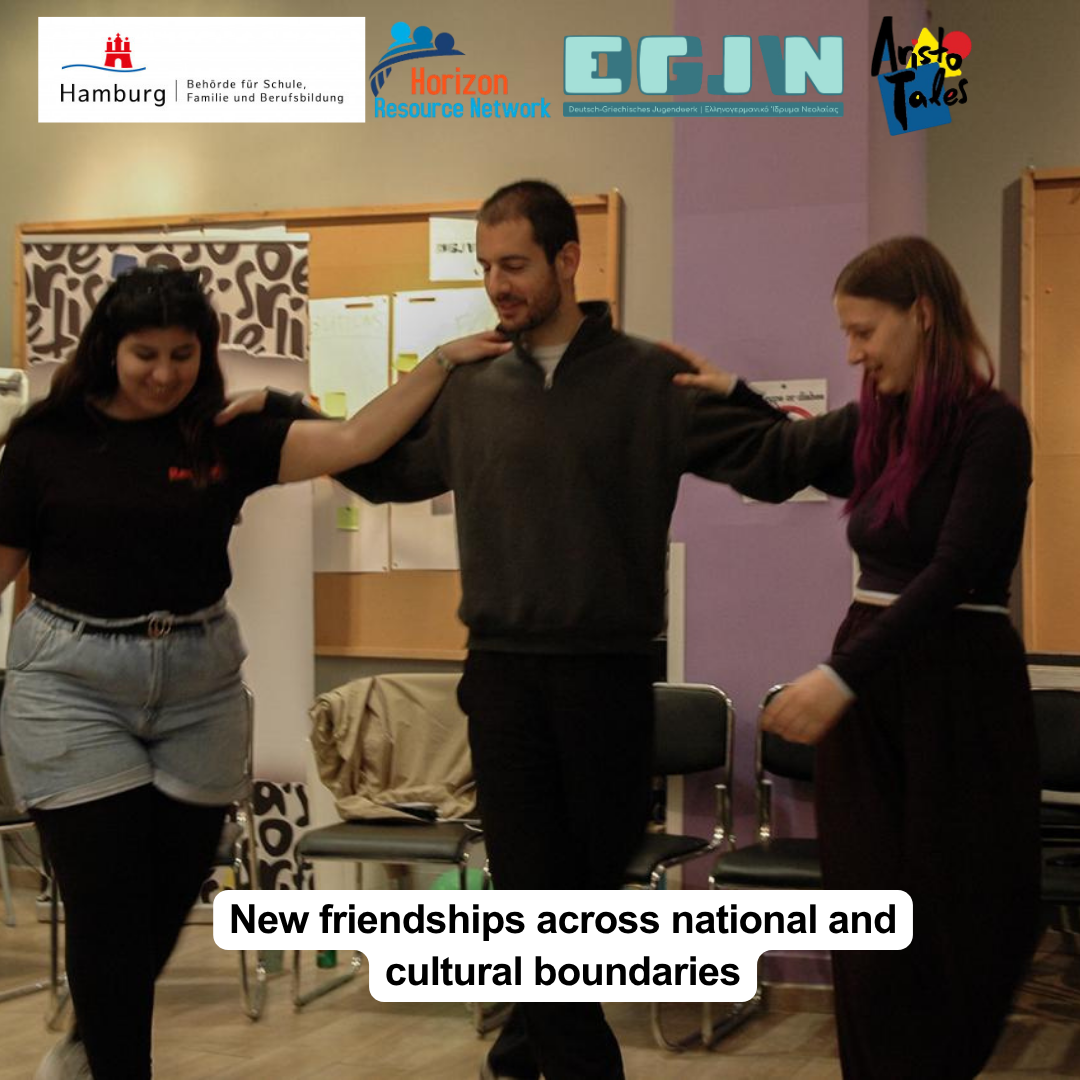
- New friendships across national and cultural boundaries
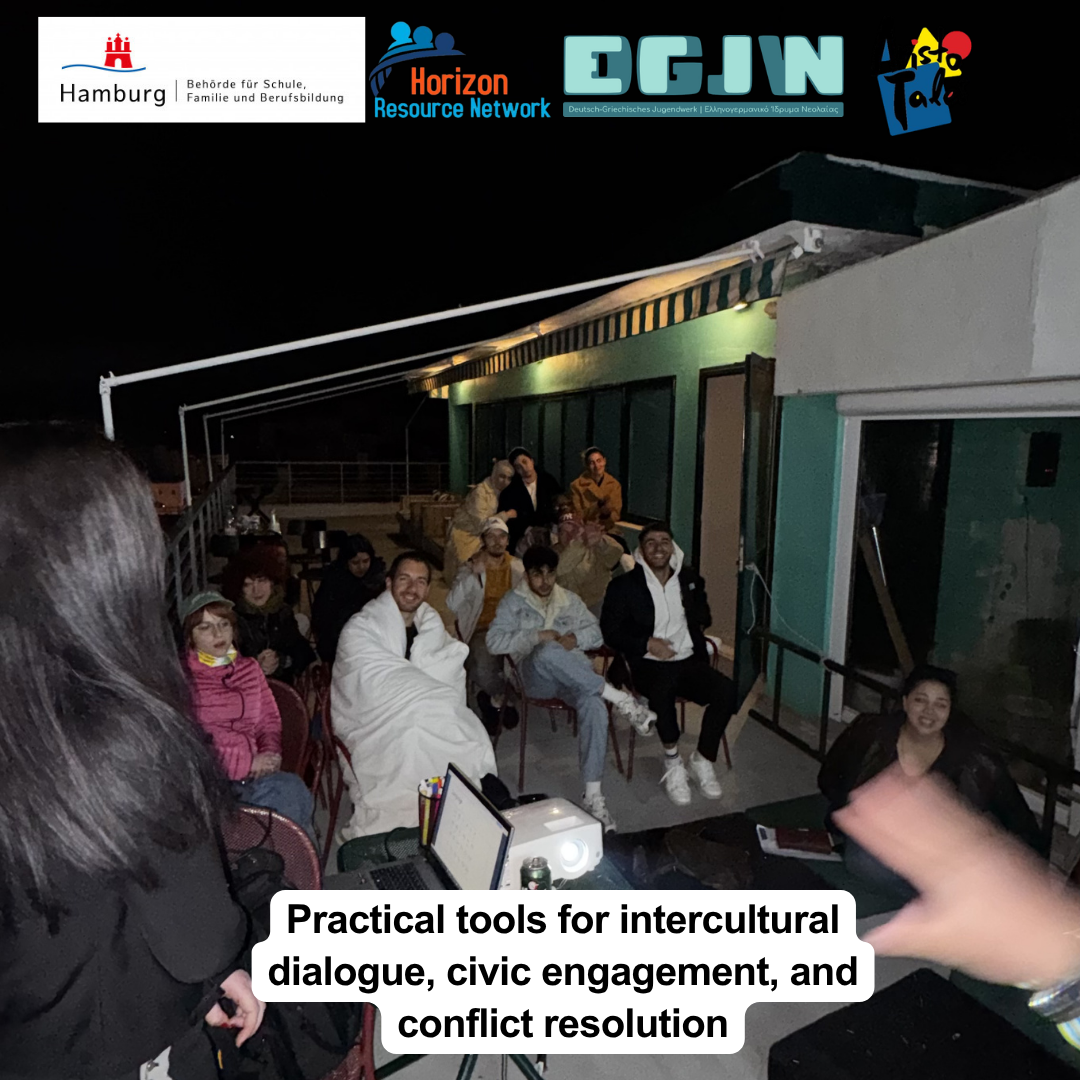
- Practical tools for intercultural dialogue, civic engagement, and conflict resolution
- A campaign ready to activate in their own communities
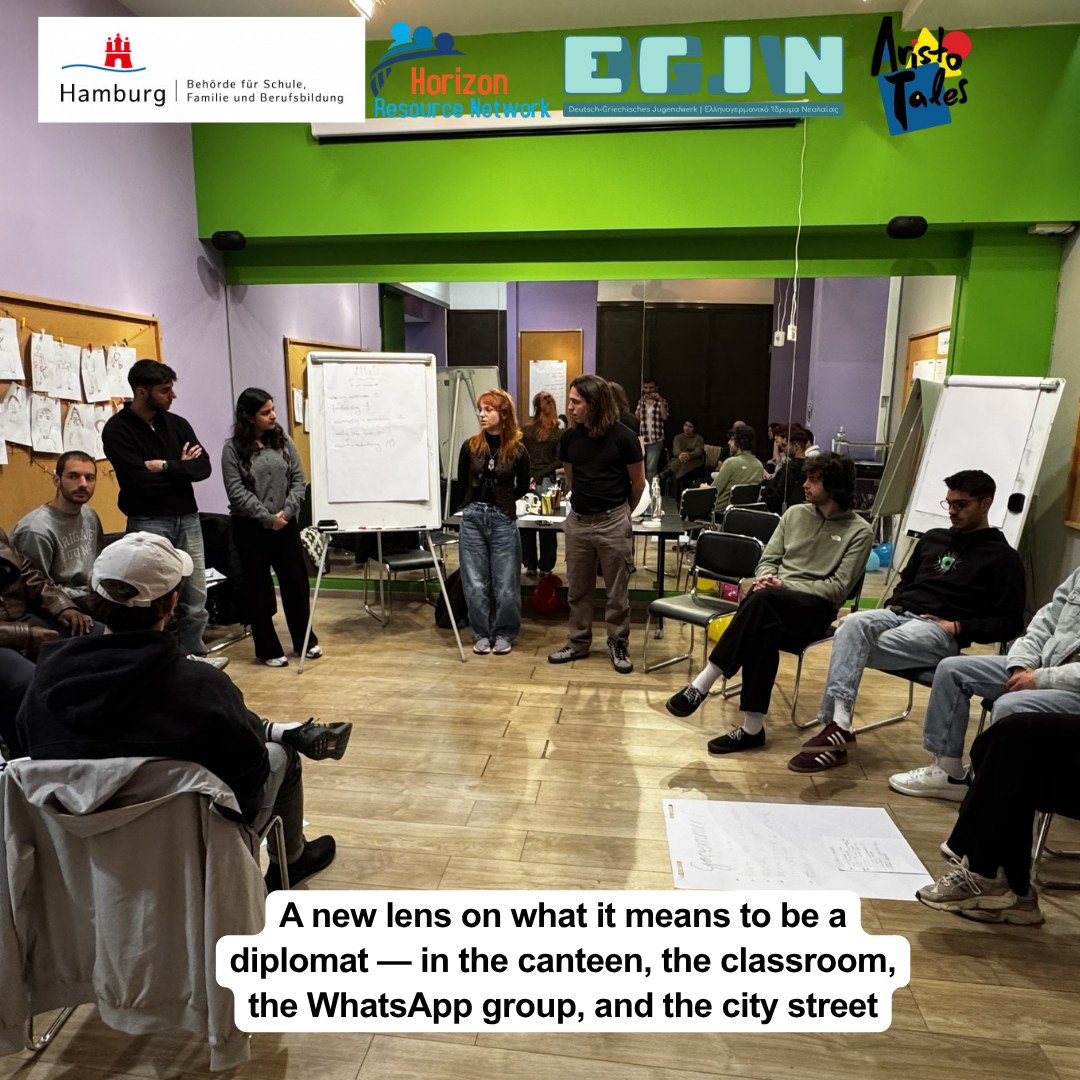
- A new lens on what it means to be a diplomat — in the canteen, the classroom, the WhatsApp group, and the city street
For many, it was their first time living and learning in an international setting. For all, it was a reminder that young people don’t need to wait for permission to build the communities they believe in.
Thank You
This exchange would not have been possible without the support of the Deutsch-Griechisches Jugendwerk (DGJW) and the Hamburg Behörde für Schule, Familie und Berufsbildung, whose co-financing ensured that every participant could join fully — free of charge, free of barriers.
A huge thank you to our partners at Aristo Tales for their warmth, creativity, and professionalism in hosting us in Thessaloniki.
And of course — thank you to the 12 young people who showed up, opened up, and proved that everyday diplomacy is very much alive.
Want to take part in our next international exchange? Follow us on social media or sign up to our newsletter to hear about upcoming opportunities. And if you’re interested in partnering with Horizon Resource Network on a future project, we’d love to hear from you: info@horizonresourcenetwork.org
Project duration:
01.01.2026 – 31.06.2026
Project Status:
Ongoing
Project Sponsors:
DGJW